Biggest Frozen Silent V2 Buying Mistakes (And How to Avoid Them)
Introduction
The Frozen Silent V2 has become a name buyers see repeatedly when shopping for a quiet cooling solution. Its promise of near-silent operation appeals to a wide range of users—from home theater PC builders and audio professionals to gamers and workstation owners who want performance without audible distraction. With attention comes confusion: many buyers make preventable mistakes when deciding whether the Frozen Silent V2 is the right choice for their system and expectations.
This article walks through the most common purchasing mistakes around the Frozen Silent V2, examines the product in practical terms, and offers a clear buying guide so that readers can make an informed decision. The emphasis is editorial and practical—what people actually care about in real-world use, and how to avoid common traps that lead to disappointment or returns.
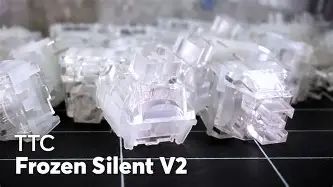
Product review and analysis: What the Frozen Silent V2 gets right—and where to be cautious
Design and build quality
The Frozen Silent V2 positions itself as a thoughtfully designed cooler with an emphasis on acoustic performance. The visual design choices tend to favor minimalism, and the build quality on many units reviewed by third parties is generally solid: machined contact surfaces, compact mounting hardware, and rubberized anti-vibration components where fans interface with the frame.
Where buyers should exercise caution is in assuming that a clean exterior equals trouble-free installation. The minimalist footprint may hide compromises in mounting complexity, bracket alignment, or clearance requirements that only become apparent during assembly—especially in compact cases or on motherboards with tall memory modules.
Thermal performance
Thermal performance for the Frozen Silent V2 typically sits in the mid-to-upper range for its category: it targets quiet cooling for mainstream CPUs rather than absolute thermal dominance. In everyday workloads—web browsing, office productivity, video streaming—temperatures remain well within safe operating bounds. Under sustained heavy loads such as long render jobs or prolonged gaming, buyers should expect performance to be influenced by case airflow and ambient temperature.
One common misunderstanding is to equate "silent" with "high thermal margin." Buyers expecting the Frozen Silent V2 to outperform bulkier high-airflow coolers in overclocking scenarios often encounter thermal throttling or higher fan speeds under extreme loads. The key takeaway: the Frozen Silent V2 is optimized for low noise at reasonable cooling ability, not for pushing extreme overclocks under poor airflow conditions.
Noise characteristics and acoustics
Where the Frozen Silent V2 shines is in subjective acoustics: the tonal profile of its fans and the vibration damping often produce a perceived quieter environment compared to similarly rated coolers. The engineering focus on low-RPM operation and smooth fan blades reduces high-pitched harmonics that many find irritating in other designs.
However, buyers should avoid relying solely on manufacturer noise numbers—these are measured in controlled environments and can be misleading. Real-world noise is system-dependent: vibration transfer to the case, fan bearing wear, and interaction with case airflow generate audible artifacts not captured in promotional specs.
Installation and compatibility
Compatibility is the area that causes the most returns. Buyers commonly overlook three things:
- Socket and motherboard compatibility: Even if the boxed hardware lists common sockets, sub-variants and new motherboard layouts can interfere with bracket fitment or clearance.
- RAM and VRM clearance: Low-profile memory may be required in some builds. Tall heat spreaders can collide with the edges of a cooler that sits close to the RAM slots.
- Case clearance and airflow: The cooler may physically fit but still block case airflow or interfere with adjacent components in small form-factor cases.
Before ordering, it is essential to verify the exact clearances for your motherboard and case—not assume universal fit.
Find top-rated Electronics products at great prices.
View Offers →Real-world use cases: who benefits most
The Frozen Silent V2 is a sensible choice in a variety of real-world scenarios:
- Home Theater PC (HTPC): When a living room rig must stay unobtrusive during movies, the Frozen Silent V2’s low tonal signature and modest profile are advantages.
- Recording and streaming studios: Musicians and podcasters require quiet backgrounds for live takes—this cooler helps reduce interfering fan noise picked up by microphones.
- Office and developer workstations: Systems that perform intermittent heavy tasks but are idle much of the day benefit from quiet operation without the need for aggressive cooling headroom.
- Light gaming rigs: For gamers who prefer low-volume setups and do not aggressively overclock, the balance of noise and cooling can be attractive.
It is less ideal for extreme overclockers, liquid-cooling enthusiasts who prefer AIOs for headroom, and small cases where forced airflow constraints limit any air cooler’s capability.
Maintenance, longevity and service
Long-term satisfaction depends on proper vendor support and routine maintenance. Fans and bearings wear out, thermal paste degrades, and small issues like mounting screw loosening can introduce vibration. Buyers often underestimate maintenance requirements for "quiet" systems; a single noisy bearing can ruin the perceived silence of an otherwise excellent cooler.
Warranty terms differ between vendors—check the length and what is covered before purchase. Equally important is the availability of replacement fans or mounting kits for future motherboard generations.
Pros & Cons
Pros
- Strong emphasis on low-noise acoustic design and pleasant tonal characteristics
- Generally compact form factor suitable for many mainstream cases
- Good build quality with vibration-damping measures
- Well-suited to HTPCs, studios, and quiet office workstations
- Balanced performance for everyday and moderate heavy workloads
Cons
- Not intended as an extreme overclocking solution—limited headroom in tight airflow conditions
- Potential clearance issues with tall RAM or crowded VRM areas
- Actual noise depends on system integration; one noisy fan or poor mounting can negate the benefits
- Replacement parts and long-term support vary by vendor
- Buyers sometimes misinterpret "silent" marketing as "maintenance-free"
Comparison: Frozen Silent V2 vs. Common Alternatives
| Category | Frozen Silent V2 | Noctua NH-series (example) | be quiet! Dark Rock (example) | Arctic Freezer (example) |
|---|---|---|---|---|
| Primary focus | Low tonal noise and compact profile | High-efficiency air cooling with proven performance | High-end near-silent heavy-duty cooling | Good value with balanced noise/performance |
| Thermal headroom | Moderate—great for mainstream CPUs | High—often used on demanding systems | High—designed for heavier loads | Moderate to high depending on model |
| Size / clearance | Compact-to-medium footprint | Larger in many models—requires case planning | Large—may restrict RAM clearance | Varies; some low-profile options exist |
| Noise signature | Soft, low-pitched—perceived as quieter | Neutral and smooth, well-damped | Very low at idle, climbs under load | Balanced; fans can be audible under load |
| Ease of installation | Moderate—watch mounting alignment | Generally straightforward with wide socket support | Installation can be fiddly due to size | Usually straightforward with good instructions |
| Best for | Quiet living-room systems, studios, mainstream builds | Enthusiasts seeking reliable high cooling | High-performance silent builds | Cost-conscious buyers seeking solid value |
Buying guide: How to avoid the biggest Frozen Silent V2 mistakes
Common mistake 1 — Confusing "silent" marketing with limitless thermal capability
What buyers do: Assume a silent-focused cooler will match heavyweight coolers in all scenarios.
How to avoid it: Decide the primary use case first. If the system will spend most of its time doing light tasks or media playback, prioritize acoustics. If long-duration CPU-heavy tasks or overclocking are regular, prioritize cooling headroom first and consider larger air coolers or water cooling alternatives.
Common mistake 2 — Ignoring physical clearance and compatibility
What buyers do: Order based on generic compatibility lists without verifying motherboard layout, RAM height, or case dimensions.
How to avoid it: Measure the distance from the CPU socket to the nearest obstruction on the actual motherboard and case. Check RAM height against the cooler’s stated clearance. If measurements are not available, look for community builds using the same motherboard or case to confirm fit.
Common mistake 3 — Overreliance on manufacturer noise and thermal numbers
What buyers do: Accept manufacturer dB and wattage claims at face value.
Discover deals on Electronics — updated daily.
Browse Now →How to avoid it: Read multiple independent reviews and watch user videos that show the cooler in real systems. Focus on subjective impressions of tonal characteristics as well as objective test outcomes in systems similar to one’s own.
Common mistake 4 — Skipping the maintenance plan
What buyers do: Think a silent cooler requires no maintenance and neglect replacement of thermal paste and fans.
How to avoid it: Create a simple maintenance plan: check for dust every 6–12 months, reapply thermal paste every 2–3 years depending on use, and be prepared to replace fans after several years if bearings degrade. Factor replacement part availability into the purchase decision.
Common mistake 5 — Purchasing from unreliable sellers or confusing model revisions
What buyers do: Buy the first listing with a good price without checking seller reputation or ensuring the model is the latest revision.
How to avoid it: Confirm seller reputation, check the exact model name and SKU, and read the included accessories list. Some revisions include different mounting kits or updated fans; confirm what is in the box to avoid missing components needed for installation.
Buying checklist
- Use-case match: Is the primary goal quiet operation, maximum cooling, or a mix?
- Compatibility confirmation: Check socket support, RAM clearance, and case clearance with measurements or verified build photos.
- Airflow context: Confirm case intake/exhaust setup will allow the cooler to perform—no cooler fixes poor case ventilation.
- Noise expectations: Read multiple subjective reviews to set realistic noise expectations for idle and load conditions.
- Maintenance plan: Understand access for dust cleaning and fan replacement.
- Vendor & warranty: Verify warranty terms, replacement part availability, and seller reputation.
- Future upgrades: Consider whether the cooler will still fit with planned future motherboards or RAM upgrades.
How to test a Frozen Silent V2 before committing
After receiving the unit, perform these quick tests before full installation or finalizing satisfaction:
- Dry-fit the cooler: Mount it without thermal paste to confirm mechanical fit and clearance. This avoids surprises once the CPU is populated with paste.
- Run a short noise check: Power the system with a basic boot and listen for whirring, rattles, or harmonic tones. If anything sounds off, check mounting screws and fan mounts.
- Monitor temps under a controlled short load: Use 10–15 minute stress periods that reflect typical heavy workloads for the intended usage (e.g., a quick render or a benchmark). Look for abnormal spikes or aggressive fan curves indicating insufficient airflow.
- Inspect fan control: Ensure fan headers and any provided controller support desired behavior (BIOS PWM control, low-speed profiles, or proprietary software).
Conclusion
The Frozen Silent V2 can be an excellent solution for those who prioritize low-noise acoustics without sacrificing reasonable cooling performance. Its strengths lie in tonal refinement, compact design, and suitability for living-room systems, small workstations, and audio-sensitive environments. The most frequent buying mistakes—overestimating thermal headroom, neglecting physical compatibility, relying solely on marketing noise numbers, skimping on maintenance, and buying without verifying the exact model or seller—are all avoidable with a short checklist and a little preparation.
Ultimately, a good purchase decision aligns use case and expectations: choose quiet-oriented hardware for quiet workloads, and choose higher-headroom coolers when sustained heavy loads or overclocking are expected. By checking clearances, reading real-world reviews, and planning for maintenance, buyers can enjoy the benefits the Frozen Silent V2 promises without the frustrations that lead to returns or regrets.