Biggest Panasonic Lumix Tz300 Buying Mistakes (And How to Avoid Them)
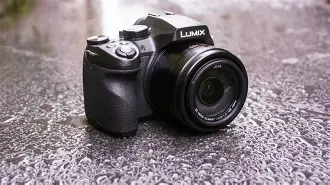
The Panasonic Lumix TZ300 (also known as the ZS300 in certain regions) represents a pinnacle of the travel zoom category, offering a compelling blend of reach, portability, and image quality. However, as with any sophisticated piece of imaging technology, the path to a satisfying purchase is fraught with potential pitfalls. Many enthusiasts and casual photographers alike fall into common traps when evaluating this specific model, often leading to buyer's remorse or a failure to utilize the camera to its full potential. Understanding these mistakes is the first step toward making an informed investment that truly enhances your photographic journey.
The allure of the TZ300 lies in its versatility. It is designed for the traveler who needs to capture sweeping landscapes one moment and a distant architectural detail the next, all while keeping the gear light enough to carry in a jacket pocket or a small shoulder bag. Yet, the very features that make it attractive—its massive zoom range and compact form factor—are often the sources of the most significant misunderstandings. In this detailed guide, we will analyze the most frequent errors made during the buying process and provide actionable advice on how to navigate the market like a seasoned professional.
Misunderstanding the Sensor Size Trade-off
One of the most frequent mistakes buyers make is a lack of clarity regarding sensor physics. The Lumix TZ300 utilizes a 1-inch type sensor. While this is significantly larger than the sensors found in standard smartphones or entry-level point-and-shoots, it is still much smaller than the APS-C or Full Frame sensors found in mirrorless or DSLR cameras. The mistake occurs when buyers expect the low-light performance or shallow depth of field of a professional studio camera within this travel-friendly body.
Because the sensor is smaller, it has a higher pixel density, which can lead to increased digital noise when shooting in dimly lit environments such as evening markets or indoor museums. Buyers who fail to account for this often find themselves disappointed when their high-ISO shots lack the "clean" look of more expensive gear. To avoid this, it is essential to understand that the TZ300 is a tool for convenience and daylight versatility. While it handles low light better than most compacts, it has its limits. A savvy buyer should prioritize this camera for travel and outdoor documentation rather than specialized low-light event photography.
Overestimating the Utility of the Maximum Zoom Range
The "Ultra-Zoom" label is a primary selling point for the TZ300, but it is also a source of significant user error. The camera boasts a powerful Leica-branded lens with an impressive focal range. The mistake many buyers make is assuming that every shot taken at the maximum focal length will be tack-sharp and professional. In realidad, shooting at the long end of the zoom requires excellent lighting conditions and a very steady hand—or, ideally, a tripod.
Atmospheric haze, heat shimmer, and camera shake are all magnified exponentially at high zoom levels. Buyers often blame the camera for "blurry" photos at 300mm or beyond (equivalent), when the issue is often physics or environmental factors. Before purchasing, consider whether you actually need that much reach regularly. If 90% of your photos are of family, street scenes, or wide vistas, the extreme zoom might be a secondary benefit rather than a necessary feature. Understanding the limitations of long-range optics helps manage expectations and improves the overall shooting experience.
Ignoring the Ergonomics and Menu Complexity
Panasonic is renowned for offering deep customization options, and the TZ300 is no exception. However, a common mistake is underestimating the learning curve associated with these menus. Many buyers choose the camera for its "compact simplicity" but are quickly overwhelmed by the sheer number of physical buttons and digital menu layers. The TZ300 is a "power user" compact. It offers phenomenal control for those who want it, but it can be frustrating for those who just want to point and shoot at everything.
The compact nature of the body also means that buttons are placed closely together. For those with larger hands, this can lead to accidental button presses. To avoid this mistake, prospective buyers should ideally handle the camera in person or carefully study the layout of the function buttons and the touchscreen interface. If you prefer a minimalist experience, the TZ300 might offer more complexity than you actually desire.
Looking for the best Cameras & Photography deals on Amazon?
Browse Now →Detailed Product Analysis: The Lumix TZ300 in Focus
The Panasonic Lumix TZ300 sits in a unique position within the imaging world. It is built around a Leica DC Vario-Elmarit lens system that is optimized for clarity across its entire focal range. It utilizes advanced 4K technology, not just for video, but for unique features like "4K Photo" mode, which allows users to extract high-quality 8-megapixel stills from a 30fps burst. This is a game-changer for capturing fast-moving subjects like wildlife or children at play.
The inclusion of a high-resolution Electronic Viewfinder (EVF) is another standout feature. Many compact cameras rely solely on the rear LCD, which can be nearly impossible to see in direct, harsh sunlight. The EVF on the TZ300 allows for traditional eye-level composition, providing a more stable third point of contact with your face, which helps reduce camera shake. Furthermore, the 5-axis Hybrid Optical Image Stabilizer (O.I.S.) is specifically tuned to compensate for the types of motion typical of handheld travel photography.
Pros and Cons of the Panasonic Lumix TZ300
- Pro: Versatile Focal Range – The ability to go from wide-angle landscapes to distant zooming in a pocketable device is unmatched in most camera classes.
- Pro: 4K Capabilities – Excellent 4K video quality and creative modes like Post Focus (choosing the focus point after the shot is taken) offer immense creative flexibility.
- Pro: High-Quality Viewfinder – The EVF makes shooting in bright daylight a breeze and aids in steadying the camera for long-range shots.
- Pro: Manual Controls – Features like a lens control ring and customizable function buttons appeal to advanced users who want full creative authority.
- Con: Low Light Limitations – Despite the 1-inch sensor, noise becomes an issue at ISO 3200 and above, which may limit indoor usage.
- Con: Battery Life – Extensive use of the 4K features and the EVF can drain the battery quickly during a full day of sightseeing.
- Con: Menu Density – The deep menu system can be intimidating for beginners who aren't used to Panasonic's logic.
Comparing the TZ300 to Market Alternatives
To help visualize where the TZ300 stands, it is helpful to compare it against other popular segments that buyers often consider. This helps clarify if the TZ300 is truly the right tool for your specific needs or if you are leaning toward a different category of camera entirely.
| Feature | Lumix TZ300 (Travel Zoom) | Premium Small-Sensor Compact | Entry-Level Mirrorless |
|---|---|---|---|
| Optical Zoom | High (15x - 20x+) | Moderate (3x - 5x) | Variable (Lens Dependent) |
| Sensor Size | 1-Inch Type | 1/2.3-Inch Type | APS-C or Micro Four Thirds |
| Portability | Pocketable (Large jacket) | Very High (Shirt pocket) | Moderate (Requires bag) |
| Video Quality | 4K / 30p Professional features | 1080p or basic 4K | 4K / 60p High Bitrate |
| Low Light Power | Good | Poor | Excellent |
Buying Guide: How to Evaluate the TZ300 for Your Lifestyle
Before committing to the Lumix TZ300, it is vital to perform a "needs assessment." Most buying mistakes happen when there is a mismatch between what a camera does and what the user actually photographs. Consider the following scenarios to see where you fit.
The Avid Hiker and Nature Lover
If your primary goal is capturing wildlife or distant mountains, the TZ300 is a stellar choice. However, the mistake here is often neglecting weather resistance. While the TZ300 is well-built, it is not a fully ruggedized "tough" camera. Buyers often mistakenly take these into extreme rain or dust without protection. If you are a landscape enthusiast, ensure you have a plan for inclement weather to protect the sophisticated lens mechanism.
The Social Media Influencer and Vlogger
The TZ300 offers great 4K video, but a common mistake is ignoring the audio. If you plan on vlogging, remember that while the internal microphones are decent, they struggle in windy conditions. Buyers should check for the presence of a microphone input (which is often missing on smaller compacts) or be prepared to use an external recorder. Additionally, the flip-screen mechanism—or lack thereof on some versions—can be a dealbreaker for "selfie-style" recording.
The Family Memory Maker
For parents capturing kids' sports or vacations, the "4K Photo" mode is the star. The mistake made by this group is usually underestimating the storage requirements. 4K files are massive. Buyers often buy the camera but use slow, low-capacity SD cards. To avoid frustration, invest in "U3" rated high-speed cards to ensure the camera doesn't "choke" during a critical burst of action at a soccer game.
Setting Realistic Financial Expectations
The TZ300 occupies a premium price bracket for compact cameras. A major mistake is purely shopping on price and ending up with a cheaper model that lacks the 1-inch sensor. Many look-alike models from competitors use the much smaller 1/2.3-inch sensor. The difference in image quality is profound. Do not fall into the trap of thinking all "point-and-shoots" are the same. The TZ300 costs more because its internal hardware is significantly more sophisticated.
Find top-rated Cameras & Photography products at great prices.
Shop Amazon →Conversely, some buyers overspend on accessories they don't need. You don't necessarily need a professional-grade flash or a heavy-duty tripod for this camera. A simple GorillaPod, a secondary battery, and a high-quality carrying case are usually sufficient. Focus your budget on the core hardware and high-speed memory first.
The Firmware and Software Oversight
Modern cameras are essentially computers with lenses attached. A subtle but frustrating mistake is failing to check or update the firmware of the TZ300 after purchase. Manufacturers often release updates that improve autofocus speed, fix bugs, or even add new features to the 4K photo modes. Many users struggle with a specific technical glitch that was actually solved by a software patch months prior. Always check the official Panasonic support site to ensure your device is running the latest version.
Similarly, the mistake of not utilizing the Wi-Fi and Bluetooth connectivity is common. The Lumix Image App allows for remote shutter control and easy transferring of photos to a smartphone for instant sharing. Many buyers ignore these features, missing out on the primary reason to have a "smart" compact in 2026: the ability to bridge the gap between high-end optics and social connectivity.
Final Considerations on Lens Care
Because the TZ300 features a telescoping lens, it is susceptible to "dust suck." When the lens extends and retracts, it can occasionally pull in minute particles of dust. A common buying mistake is not inspecting the lens movement for smoothness or ignoring the cleanliness of the barrel. Keeping the exterior of the lens barrel clean and avoiding zooming in and out in dusty or sandy environments will prolong the life of your investment and keep your images clear of internal spots that are difficult and expensive to remove.
Conclusion
The Panasonic Lumix TZ300 is a masterclass in compromise—in the best sense of the word. it balances the conflicting demands of high-end optics, significant zoom reach, and extreme portability. The biggest mistakes buyers make are rarely due to the camera's actual performance, but rather a misalignment of expectations and a lack of preparation for its specific technical requirements. By understanding the nuances of the 1-inch sensor, respecting the limitations of extreme focal lengths, and committing to learning the sophisticated menu system, you can avoid the common traps that lead to dissatisfaction.
Whether you are documenting a trek through the Alps or capturing the nuances of a city break in Kyoto, the TZ300 provides the tools necessary for high-quality storytelling. It encourages the photographer to look closer and reach further, provided they treat the device with the technical respect it deserves. Approach your purchase with a focus on how you shoot, what you shoot, and your willingness to grow with the technology, and you will find the TZ300 to be a loyal and capable companion for years to come.