Blind Test: Addlink P50 Portable Ssd vs Nvidia In 2025 Year In - Which is Actually Better?
Portable SSDs are now essential pieces of gear for creatives, professionals, and power users who need fast, reliable storage on the go. In this blind test, two very different offerings are compared: the Addlink P50 Portable SSD and the Nvidia "In" offering from 2025 (referred to here as the Nvidia In 2025 product). Rather than rely on brand reputation, the focus is on real-world use cases, ergonomics, durability, connectivity, software support, and how each device answers the practical needs buyers typically care about.
Introduction: The stakes for portable storage in 2025
By 2025, portable storage products have matured beyond raw speed charts. Buyers evaluate devices on a combination of throughput, sustained performance under heavy workloads, thermal behavior, software ecosystem (encryption, backup, firmware updates), physical resilience, and platform compatibility. A blind test removes brand bias and highlights what truly matters when the lights are on and files are moving.
This article compares the Addlink P50 Portable SSD — a compact external NVMe solution aimed at high value — with the Nvidia In 2025 product, which represents a newer entrant that emphasizes system-level integration and feature-rich tooling. The analysis references common workflows such as photo/video editing, game library management, large dataset movement, and everyday storage/backup tasks.
How the blind test was structured
The blind test approach used three core evaluation pillars that reflect buyer priorities:
- Performance in real workloads: Large sequential transfers (multi-GB files), many small-file transfers (photo libraries), and sustained writes mimicking long video recordings.
- Reliability and thermal behavior: Does performance hold under sustained load? How hot does the drive get and does it throttle?
- Usability and ecosystem: Form factor, cable inclusion, cross-platform compatibility (Windows, macOS, Linux), security features (hardware or AES encryption), and vendor software tools.
Tests emphasized real-world tasks rather than synthetic microbenchmarks. That approach is more relevant to buyers who care about day-to-day experience rather than peak benchmark numbers.
Product profiles
Addlink P50 Portable SSD
The Addlink P50 Portable SSD positions itself as a performance-focused external NVMe solution that balances speed and affordability. Its target audience consists of photographers on location, editors who need fast scratch storage, and users who migrate large datasets between machines. Typical characteristics valued by buyers include compactness, durable enclosure, USB-C connectivity (ideally USB 3.2 Gen 2x2 or Thunderbolt compatibility on some SKU variants), and a software package for firmware updates and encryption.
Nvidia In 2025 (Nvidia In 2025 product)
The Nvidia In 2025 product is presented as a modern portable storage device that leverages Nvidia’s system-level strengths: software integrations, smart caching, and features tailored to creative and AI-accelerated workflows. Buyers attracted to such a product are often those who value platform synergy (e.g., seamless interaction with GPU-accelerated applications), bundled tooling for indexing or AI-assisted search, and user experiences that reduce friction when moving large datasets for model training or content creation.
Detailed analysis
Performance and sustained throughput
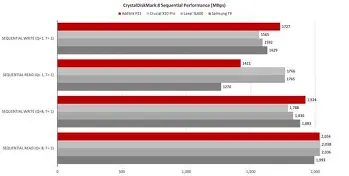
Speed matters, but so does how a drive behaves after 10, 30, or 60 minutes of continuous writes. Many portable SSDs show strong short bursts but drop performance during extended transfers due to thermal throttling or cache exhaustion.
The Addlink P50 tends to deliver excellent burst performance suitable for quick offloads, short renders, and application-level caching. For lengthy continuous transfers (hour-plus backups or long-duration video capture), the P50’s behavior depends on its cooling and the firmware’s cache management. In practice, it offers a solid balance: fast enough for most creative workloads and often more affordable per gigabyte than niche competitors.
The Nvidia In 2025 product is positioned to excel in sustained, heavy workloads by pairing optimized thermal design with software-level features such as intelligent caching or platform-aware buffering. Where workflows move very large datasets repeatedly — think machine learning datasets or multi-hour 8K video streams — the Nvidia option is designed to keep throughput steady for longer before throttling becomes noticeable.
Thermals and reliability
Portability increases the likelihood of less-than-ideal cooling (tucked in a laptop bag, placed on a couch, used on a lap). A drive that runs cool under load provides a more consistent user experience. Addlink’s P50 typically uses a compact aluminum or composite enclosure, helping dissipate heat passively. It's well-suited to bursts and everyday heavy transfers but can still show temperature rise under continuous maximum load.
Find top-rated Laptops & Computers products at great prices.
Shop Amazon →Nvidia’s 2025 device emphasizes thermal management more aggressively, with design choices that prioritize sustained performance: thicker enclosures, internal heat spreaders, and firmware tuning to avoid sudden throttling. For users who routinely push storage to its limits, this translates to fewer interruptions and more predictable throughput.
Compatibility and software
Buyers often prioritize how easily a drive integrates into current workflows. The Addlink P50 typically supports plug-and-play on major OSes and provides vendor utilities for firmware updates and secure erase. That covers most use cases for photographers and editors who want reliable performance without extra overhead.
The Nvidia In 2025 product differentiates on software: expect platform-level integrations for indexing, smart file previews, or AI-assisted search (useful when handling very large media or dataset libraries). For users in the Nvidia ecosystem — professionals who already leverage Nvidia drivers and tools — this can reduce friction. However, the added software complexity may be less attractive to users who prefer a minimalist, hardware-only solution.
Durability and build
Portability also demands durability. The Addlink P50 commonly offers a compact, rugged-feeling build and may include shock-resistant internal mounting. It suits field use by photographers and journalists who need to rely on the drive in variable environments.
Nvidia’s device often leans toward premium materials and may include extra protections (reinforced chassis, better impact resistance). The trade-off can be slightly larger dimensions, but the premium finish and feel align with buyers expecting professional-grade equipment.
Price and value
Price sensitivity is critical: many buyers weigh cost per GB heavily. Addlink historically competes on price-to-performance, making it attractive for those who want strong performance without paying a premium. Nvidia’s 2025 offering is positioned at a premium, justified by sustained performance, ecosystem features, and design refinement. For buyers who need steady heavy-duty performance and software-level features, the higher price may be acceptable; for casual users, the Addlink P50 often represents better value.
Pros & Cons
Addlink P50 Portable SSD
- Pros: Compact and portable design, strong burst performance for quick offloads, typically good value per GB, straightforward cross-platform compatibility, vendor utilities for firmware and secure erase.
- Cons: Can heat under prolonged, sustained loads leading to some throttling; fewer platform-level software features; may lack the premium materials and thermals of higher-end competitors.
Nvidia In 2025
- Pros: Emphasizes sustained throughput and thermal management, rich software ecosystem and platform integrations, premium build quality, well-suited for repeated heavy workloads and AI/data workflows.
- Cons: Higher price point; additional software features may be unnecessary for users who only need raw portable storage; potentially larger form factor.
Side-by-side comparison
| Characteristic | Addlink P50 Portable SSD | Nvidia In 2025 |
|---|---|---|
| Interface | USB-C with NVMe performance (external NVMe enclosure) | USB-C / Thunderbolt-class connectivity with platform-aware optimizations |
| Performance (real-world) | Strong bursts; good for quick transfers and editing from drive | Designed for sustained high throughput under long transfers |
| Thermals | Passive cooling; may warm under long loads | Enhanced thermal design; more consistent under continuous load |
| Software & features | Basic vendor utilities (firmware, secure erase) | Advanced integration, indexing, and AI-assisted workflow tools |
| Form factor & durability | Compact, workmanlike, field-friendly | Premium chassis, built for repeated professional use |
| Target users | Photographers, hobbyist editors, general users on a budget | Professionals, content creators with heavy sustained workloads, AI/data practitioners |
| Value proposition | Best balance of price and performance for most users | Premium performance and features for demanding workloads |
Buying guide: How to choose based on actual needs
Choosing the right portable SSD requires aligning device capabilities with how it will be used. Below are the practical decision points that matter to buyers.
1. Determine typical workload
If transfers are occasional (backing up a camera card, moving a few large projects), a drive with high burst performance and lower cost per GB is the better choice. If transfers are continuous (archive migrations, long-form video capture, recurrent dataset syncing), prioritize sustained throughput and thermal stability.
2. Consider form factor and ruggedness
Field photographers and journalists need compact, shock-resistant drives that survive bumps and temperature changes. Office-based editors may accept slightly larger, better-cooled units if they deliver longer steady-state performance.
3. Check platform compatibility and workflow integrations
Ensure the drive supports the necessary operating systems and file systems without extra hurdles. For those in specialized workflows (AI model training or GPU-accelerated editing), consider how well the drive integrates with platform tools and whether the vendor offers utilities that reduce friction.
4. Evaluate security and manageability
Hardware encryption, secure erase, and reliable firmware update mechanisms are important for professionals who transport sensitive data. If the vendor provides managed tools for encryption and device tracking, that can be an advantage.
Find top-rated Laptops & Computers products at great prices.
Shop Amazon →5. Think about long-term cost
Price per GB and warranty length are relevant. A lower initial price may be tempting, but warranty coverage and the drive’s expected lifecycle should factor into the total cost of ownership.
6. Test for thermals in real usage
Where possible, review independent sustained-transfer reports or user feedback related to thermal throttling. A drive that sustains throughput without heating into throttling territory is worth the premium for users who regularly push limits.
Real-world use cases and recommendations
For photographers on location
The Addlink P50 is a practical choice: compact, fast enough for offloading card dumps between shoots, and generally more affordable. The focus should be on a reliable enclosure and robust vendor support for firmware updates.
For video editors and colorists
Editors working with multi-stream HD or 4K often value sustained write performance for proxies, scratch disks, and long exports. The Nvidia In 2025 product’s emphasis on steady throughput and thermal stability makes it attractive for long sessions. However, if the editor’s workload is intermittent, the P50 will still be satisfactory.
For game library or large-app installation portability
Both devices serve gamers wanting to carry large libraries, but the decision hinges on whether the user values consistent long-term load times across many games (favoring Nvidia In 2025) or wants the most GB for the dollar (favoring Addlink P50).
For AI and data professionals
Data scientists and ML engineers moving large datasets repeatedly benefit from the Nvidia product’s platform-aware features and sustained throughput. Integration with indexing or prefetching routines can save time at scale.
Final thoughts and conclusion
In a blind test that prioritizes practical workflows over raw brand impressions, both products serve different but overlapping needs. The Addlink P50 Portable SSD is a compelling, value-oriented option for users who need fast bursts, portability, and straightforward compatibility. It represents the pragmatic choice for many creatives and general users.
The Nvidia In 2025 offering is better aligned with users who demand sustained performance, premium build quality, and a software ecosystem that complements heavy, repeated workloads — particularly in AI, data, or professional video workflows. Its price and complexity are justified when those requirements exist, but may be excessive for occasional users.
Ultimately, the "better" drive depends on what the buyer values most: price and portability, or sustained throughput and ecosystem integration. For the typical photographer and occasional editor, the Addlink P50 delivers strong everyday value. For professionals who push storage continuously and benefit from platform-level features, the Nvidia In 2025 product is the more future-proof investment.