Head-to-Head: Timemore Chestnut C2S vs Dji Avata 360 (Detailed Comparison)
The intersection of precision engineering and modern consumer electronics has reached a fascinating crossroads. In this detailed comparison, we explore two titans of their respective industries: the Timemore Chestnut C2S, a refined manual coffee grinder that represents the pinnacle of analog-digital mechanical synergy, and the DJI Avata 360, a flagship first-person view (FPV) drone that defines the current state of aerial cinematography. While these products serve vastly different primary functions—one fueling the morning ritual and the other capturing the world from above—they share a common demographic of enthusiasts who value tactile feedback, high-grade materials, and uncompromising performance.
For many consumers, the choice between investing in high-end hobbyist gear comes down to the "life-upgrade" factor. Are you looking to master a physical craft or to explore new dimensions of digital creativity? Both pieces of hardware demand a certain level of technical proficiency to master, and both have become the gold standard in their respective price brackets. This article breaks down the technical specifications, real-world utility, and long-term value of these two devices to help you decide which belongs in your gear bag or on your kitchen counter.
The Evolution of Precision: Timemore Chestnut C2S
The Timemore Chestnut C2S is an iterative masterpiece in the world of specialty coffee. As an evolution of the widely acclaimed C2, the C2S focuses on enhancing the mechanical reliability and ergonomic feel of the device. At its core, the C2S is a manual burr grinder designed for those who find the whirring of an electric motor disruptive to their morning peace. However, calling it "analog" does a disservice to the CNC-machined precision that goes into its construction.
The design philosophy of the C2S is centered on the "Three Pillars of Grinding": consistency, speed, and durability. The body is crafted from high-grade aluminum alloy, featuring a textured "checkered" surface that provides necessary grip during high-torque grinding of light-roasted beans. Inside, the C2S utilizes 38mm stainless steel burrs, which are significantly more durable and sharp than the ceramic burrs found in entry-level electronics-adjacent grinders. This ensures that the particle size distribution (PSD) remains tight, preventing the "muddiness" in flavor that occurs when a grinder produces too many "fines."
From a user experience perspective, the C2S is deceptively simple. It features a point-to-point "click" adjustment system located at the bottom of the burr carrier. This allows users to move from a coarse French press setting to a fine Aeropress or Moka pot setting with tactile feedback. The "S" in the C2S model signifies the shift toward an all-metal internal frame, replacing the plastic supports found in earlier versions. This change is critical for electronics enthusiasts who value longevity and "repairability" in their hardware.
Pros & Cons of the Timemore Chestnut C2S
- Pro: Exceptional build quality with an all-metal internal support structure that prevents burr wobble.
- Pro: Stainless steel 38mm conical burrs provide superior grind speed compared to ceramic alternatives.
- Pro: Highly portable design with a foldable handle (on specific variants) and included travel pouch.
- Pro: Excellent value-to-performance ratio for entry-to-mid-level specialty coffee enthusiasts.
- Con: Limited capacity; usually capped at 25-30 grams of coffee, making it less ideal for large batches.
- Con: Not fully optimized for espresso; while it can grind fine, the steps are too large for precise "dialing in."
- Con: Requirements physical effort, which may not appeal to those used to automated kitchen electronics.
The Pinnacle of Aerial Agility: DJI Avata 360
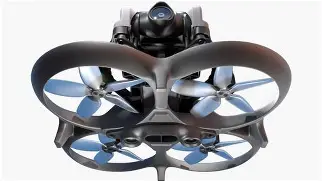
On the opposite end of the technological spectrum sits the DJI Avata 360. This is not just a drone; it is an immersive flight system designed to bridge the gap between amateur pilots and professional FPV racers. The Avata series pioneered the "cinewhoop" style for the masses—drones with ducted propellers that are safer to fly indoors and near people—but the 360 iteration takes this concept into a new stratosphere with integrated 360-degree obstacle sensing and a revamped imaging pipeline.
The electronics suite within the Avata 360 is staggering. It utilizes the O4 video transmission system, offering a low-latency, high-definition feed to the pilot's goggles even at distances often exceeding 10 kilometers in ideal conditions. The 1/1.3-inch CMOS sensor supports 4K/60fps HDR video, but the real magic is in the stabilization. DJI’s RockSteady 3.0+ and HorizonSteady algorithms ensure that even when the drone is performing aggressive acro-maneuvers or tumbling through a dive, the footage remains buttery smooth.

What sets the Avata 360 apart for the modern tech buyer is its accessibility. Traditional FPV drones required deep knowledge of soldering, radio protocols, and flight controller firmware (like Betaflight). The Avata 360 simplifies this with the Motion Controller, which allows users to steer the drone simply by tilting their hand. It is a "fly-out-of-the-box" solution that retains the thrill of high-speed flight while protecting the internal circuitry with a robust, crash-resistant frame.
Pros & Cons of the DJI Avata 360
- Pro: Immersive FPV experience with top-tier VR goggles that provide a "bird's eye" perspective.
- Pro: Propeller guards make it substantially safer and more durable than traditional "open-mount" drones.
- Pro: Advanced GPS and downward sensing allow for a "Panic Brake" feature that stops the drone mid-air instantly.
- Pro: High-quality camera sensor capable of professional-grade color grading and slow-motion capture.
- Con: High barrier to entry regarding price, including the cost of goggles, batteries, and the air unit.
- Con: Battery life is limited to approximately 18-23 minutes, necessitating multiple spare packs for a day of shooting.
- Con: Significant regulatory requirements in many regions (Remote ID, registration, and flight restrictions).
Detailed Technical Comparison
To better understand how these two pieces of high-end equipment stack up in terms of their mechanical and electronic complexity, we have compiled the following comparison table. While they exist in different categories, the metrics of "Precision," "User Interface," and "Maintenance" are universal.
Find top-rated Electronics products at great prices.
View Offers →| Feature | Timemore Chestnut C2S | DJI Avata 360 |
|---|---|---|
| Primary Industry | Culinary / Mechanical Engineering | Aerospace / Digital Imaging |
| Core Component | 38mm Stainless Steel CNC Burrs | 1/1.3-inch CMOS Sensor & Brushless Motors |
| Power Source | Manual (User Input) | Intelligent Flight Battery (Li-Po) |
| Build Material | Aluminum Alloy & Stainless Steel | High-Impact Polycarbonate & Carbon Fiber |
| Precision Control | Manual Click Adjustment (36+ levels) | 6-Axis Gyroscope & O4 Transmission |
| Weight | ~430g | ~410g (Equipment dependent) |
| Maintenance | Dry brushing and occasional disassembly | Firmware updates, prop replacement, battery cycling |
Real-World Use Cases: Where Precision Meets Lifestyle
Understanding these products requires looking at the lifestyle they support. The buyer of a Timemore Chestnut C2S is likely someone who values the "slow life" movement. They might be a digital nomad who wants a high-quality cup of coffee while working from a remote cabin, or an office professional who finds the process of hand-grinding to be a meditative break from screens. The C2S is built for the traveler; it fits into the plunger of an Aeropress, making it the ultimate tool for those who refuse to compromise on quality while on the move.
Conversely, the DJI Avata 360 is for the adrenaline seeker and the storyteller. It is used by real estate videographers to create "fly-through" tours of luxury homes, and by outdoor enthusiasts to capture their mountain biking or skiing runs from angles that were impossible a decade ago. The "360" aspect of the obstacle sensing means it can be flown in tighter spaces—like through a forest canopy or under a bridge—with a much lower risk of a catastrophic "fly-away" or crash. It is an electronics marvel that turns the sky into a Playground.
When we look at the crossover, we find the "Tech Explorer." This is the individual who packs their DJI Avata 360 for a morning hike to capture the sunrise, but also brings their Timemore C2S and a portable stove to enjoy a fresh pour-over while the drone batteries are charging. Both products emphasize "the experience" over the mere end result.
Buying Guide: Which Investment is Right for You?
Choosing between these two legendary pieces of gear (or deciding which to prioritize) depends on several factors ranging from budget to lifestyle commitments.
1. Technical Proficiency and Learning Curve
The Timemore C2S has a very shallow learning curve. If you can turn a handle and read a chart for "clicks," you can master it in five minutes. However, it requires physical stamina and a willingness to engage with the tactile side of brewing. The DJI Avata 360 has a much steeper learning curve. Even with the simplified Motion Controller, understanding airspace regulations, signal interference, and the physics of flight takes time. If you enjoy the process of "leveling up" a skill, the Avata offers more depth.
2. Long-Term Value and Durability
In terms of longevity, the Timemore C2S is a "buy it for life" (BIFL) candidate. There are no circuits to fry and no batteries to degrade. With proper cleaning, it will function the same in ten years as it does today. The DJI Avata 360, while robust, is an electronic device subject to Moore's Law and battery aging. In five years, its sensor may feel outdated and its batteries may need replacement. You are buying the Avata for the cutting-edge performance of *now*.
3. Portability and Form Factor
Both are leaders in portability. The C2S is thin and cylindrical, easily sliding into any backpack pocket. The Avata 360 is remarkably compact for its power, often fitting into a small sling bag along with its goggles. If you are a light traveler, both will appeal, but the C2S is significantly less "fussy"—no need to worry about TSA regulations on lithium batteries or fragile gimbal guards.
4. Initial vs. Total Cost of Ownership
The C2S is a one-time purchase. You might buy a new brush or a replacement burr after years of heavy use, but the costs stop at the checkout. The Avata 360 is the start of an ecosystem. You will likely want the "Fly More" combo (extra batteries), a hard-shell carrying case, and perhaps a high-speed microSD card. For the price of one Avata 360 setup, you could theoretically buy a dozen C2S grinders.
Discover deals on Electronics — updated daily.
See Deals →Advanced Hardware Analysis
To truly compare these items, we must look at the "engineering soul" of each. The Timemore C2S uses a dual-bearing system to stabilize the central shaft. This is a common feature in high-end industrial machinery, but bringing it to a consumer hand grinder was a revolutionary step for the price point. By ensuring the shaft does not tilt under the pressure of hard beans, Timemore ensures that the gap between the inner and outer burr remains constant. This is similar to how the DJI Avata 360 uses its internal IMU (Inertial Measurement Unit) to constantly calculate its position in 3D space. Both devices are obsessed with stability, just in different planes of existence.
The Avata 360's cooling system is another marvel of electronics design. Because FPV drones generate immense heat from their high-powered video transmitters (VTX) and ESCs (Electronic Speed Controllers), the Avata 360 uses its own propeller wash to pull air through the internal "ventilation tunnels." This passive-active cooling hybrid allows the drone to remain small without thermal throttling. In a parallel sense, the C2S uses its aluminum body as a heat sink to prevent the beans from heating up during a fast grind, which could otherwise "pre-cook" the delicate oils in the coffee and ruin the flavor profile.
Maintenance and Care
For the electronics enthusiast, maintenance is often part of the fun. The Timemore C2S should never be washed with water, as this can lead to rust on the steel burrs or bearings. Instead, it requires a deep clean every few weeks using a specialized brush or an air blower. Disassembling the unit is a satisfyingly mechanical process that reveals the simplicity of the design.
The DJI Avata 360 requires a more digital approach to maintenance. Regular firmware updates are necessary to ensure the obstacle sensing and GPS databases (to avoid no-fly zones) are current. Physically, the propellers should be inspected after every flight for "nicks" or cracks that could cause vibrations. The camera lens requires a microfiber cloth and specialized cleaning solution to maintain the clarity required for 4K capture. Both devices reward the owner who takes the time to understand their inner workings.
Conclusion
The Timemore Chestnut C2S and the DJI Avata 360 represent the pinnacle of their respective fields by offering "prosumer" performance in an accessible package. The C2S is a triumph of mechanical engineering, offering a tactile, reliable, and life-long tool for the coffee purist. It strips away the unnecessary flash of modern appliances to focus on the core requirement of grind uniformity.
The DJI Avata 360, on the other hand, is a masterpiece of electronic integration. It takes the complex, often dangerous world of FPV flight and wraps it in a layer of smart sensors and intuitive controls that allow anyone to experience the thrill of flight. It is a tool for the digital creator, the explorer, and the tech enthusiast who wants to push the boundaries of what is possible with a handheld controller and a pair of goggles.
Ultimately, the choice between these two depends on which part of your day you wish to enhance. If you seek to improve your mornings and invest in a tool that will outlast your current kitchen, the Timemore Chestnut C2S is the definitive choice. If you seek to capture the world from a new perspective and dive into the cutting edge of drone technology, the DJI Avata 360 stands alone. Both are world-class examples of what happens when designers refuse to compromise on quality, making them both worthy of a place in any modern enthusiast's collection.