I Switched to the Klipsch Flexus Core 100 and Here is What Happened
Category: TVs
Introduction
The Klipsch Flexus Core 100 has positioned itself as an accessible audio upgrade for people who want more from their television than the thin, tinny output of built-in speakers. This article provides an editorial, third-person account of what typically happens when someone replaces a TV's stock sound with the Flexus Core 100: the setup experience, how everyday content sounds, and whether it meets the priorities buyers usually have — dialogue clarity, music reproduction, movie impact, and ease of use.
Throughout the review, real-world scenarios are emphasized: a small living room used for mixed TV and music playback, a bedroom where space and simplicity matter, and a casual gamer who cares about low-latency audio. The goal is to help readers decide whether the Flexus Core 100 matches their needs without assuming specialist audio knowledge.
What the Klipsch Flexus Core 100 Is Aiming To Be
The Flexus Core 100 is best understood as a compact audio solution designed to replace or significantly improve a TV's onboard sound. It is marketed toward users who want a better listening experience without the complexity or footprint of a full surround system. In practice, it aims to deliver clearer dialogue, improved midrange detail for music and speech, and a livelier presentation than typical TV speakers, while offering straightforward connections and minimal setup.
Design and Build — First Impressions
Physically, the Flexus Core 100 adopts a compact, TV-friendly form factor that fits beneath most sets or can be wall-mounted. The build reflects Klipsch’s emphasis on durable materials and a no-nonsense aesthetic: matte surfaces, clean lines, and controls that remain intuitive. The compact footprint makes it practical for apartments and bedrooms where space is at a premium.
Consumers who prioritize discreet design will appreciate that it does not demand a large footprint or visual dominance in a room. At the same time, the unit feels solid, which aligns with buyer expectations for a product from a brand known for its speaker heritage.
Connectivity and Setup
Connectivity is a frequent decision point for buyers. The Flexus Core 100 typically offers the essentials: a TV connection (HDMI ARC/eARC or optical on many similar units), Bluetooth for streaming from phones, and an auxiliary input for legacy devices. The inclusion of HDMI ARC/eARC is particularly useful for modern TVs because it enables simplified control and higher-quality audio pass-through when available.
Setup tends to be plug-and-play for most users. Unboxing and mounting take only a few minutes: connect the soundbar to the TV, pair a phone if desired, and adjust basic settings via an included remote. For households that want a minimalist setup, the Core 100 intentionally avoids complicated calibration routines. Power users, however, should note that the simplicity limits the amount of fine-grained audio tuning available on the device itself.
Sound Profile and Real-World Performance
Sound is where the Flexus Core 100 matters most. In everyday television viewing, the unit markedly improves dialogue intelligibility. Viewers watching newscasts, dramas, or talk shows typically notice voices become clearer and more present, which reduces the need to repeatedly adjust TV volume.
Find top-rated TVs & Home Theater products at great prices.
Browse Now →For film and streaming series, the soundbar provides more depth and presence than most flatscreen speakers. Explosions, soundtrack swells, and ambient effects gain a sense of space that makes scenes feel more cinematic. The improvement is noticeable in small and medium-sized rooms, though buyers who crave chest-thumping low bass for action films may still desire an external subwoofer to complete the experience.
Music playback behaves differently depending on source material. Acoustic and vocal tracks tend to benefit from the soundbar’s clarity, revealing more detail than a TV speaker. Electronic and bass-heavy music highlights the trade-off: the Flexus Core 100 can produce satisfying rhythm and punch, but it will not match a dedicated bookshelf or floorstanding speaker paired with a subwoofer when it comes to absolute bass extension and dynamics.
In gaming, latency is an important consideration. The Core 100 generally performs well in casual gaming scenarios, but competitive gamers seeking the lowest possible delay often prefer direct wired connections or specific game-mode settings that minimize processing. Users should check their TV’s pass-through and game mode options to ensure the best match.
Room Size and Placement Effects
Room acoustics and placement matter. In small rooms and open-plan apartments, the Flexus Core 100 fills the listening area effectively, offering a more immersive soundstage than TV speakers. In larger living rooms, a single compact soundbar will still improve clarity and midrange presence but may struggle to deliver the same surround feeling and low-frequency authority that multi-piece systems provide.
Everyday Use Cases
- Apartment living: an easy upgrade that improves movies and music without taking up much space.
- Bedroom TV: clear dialogue and simple Bluetooth streaming make it practical for a second set.
- Secondary sound system for a kitchen or den: compact size and easy setup make it convenient.
- Starter home theater: works well as the central front channel before adding a subwoofer or rear speakers.
- Casual music listening: delivers better fidelity than TV speakers for playlists and podcasts.
Pros & Cons
Pros
- Improved dialogue clarity: noticeably better than most built-in TV speakers, making speech-driven content easier to follow.
- Compact footprint: designed to fit under a TV or on a narrow shelf without dominating the room.
- Straightforward setup: minimal configuration required, suitable for users who do not want technical complexity.
- Versatile connectivity: wireless streaming and standard TV inputs cover common use cases.
- Build quality: a solid feel that aligns with expectations for a name-brand speaker.
Cons
- Limited bass extension: delivers punchy mid-bass but may not satisfy listeners who want deep low-frequency impact without a separate subwoofer.
- Limited advanced tuning: lacks extensive room calibration or parametric equalizer controls found on higher-end sound systems.
- Not a full surround replacement: while it improves front-stage imaging, it cannot replicate a multi-speaker home theater by itself.
- Potential for variation: perceived performance depends on room size and TV pairing; results vary between installations.
Comparison: Where the Flexus Core 100 Sits
| Product/Setup | Best for | Dialogue | Music | Bass | Ease of Setup |
|---|---|---|---|---|---|
| Klipsch Flexus Core 100 | Small-to-medium living rooms, bedrooms, apartments | Strong — clear and forward | Good — detailed mids and vocals | Moderate — improved over TV speakers, limited vs dedicated sub | High — plug-and-play |
| Built-in TV speakers | Very casual viewing, background audio | Poor — thin and recessed | Poor — lacks detail | Poor — little to no bass | Very High — no setup |
| Typical compact soundbar | Budget-conscious upgrades | Variable — depends on model | Fair — can be bright or thin | Weak to Moderate | High |
| Bookshelf speakers + amp | Music-first listeners, dedicated setups | Excellent — natural and nuanced | Excellent — fuller frequency range | Good to Excellent (with sub) | Moderate — more parts to configure |
Buying Guide — What to Consider Before Upgrading
When deciding whether the Flexus Core 100 is the right upgrade, readers should weigh several practical factors. The following guide outlines the typical concerns and recommended priorities for different buyer profiles.
1. Room Size and Placement
Measure the listening area and consider how far viewers sit from the TV. Compact soundbars excel in small to medium rooms. If the room is large or open-plan, plan for additional speakers or a subwoofer to avoid a thin-sounding front stage.
2. Primary Use: Movies, Dialogue, Music, or Gaming?
Buyers prioritizing dialogue and streaming shows will appreciate the clarity gains. Movie lovers who expect deep, immersive low end should budget for an external subwoofer. Gamers should check latency specs or rely on TV game mode and a direct HDMI connection when possible.
3. Connectivity Needs
Ensure the soundbar offers the right inputs for a TV and source devices. HDMI ARC/eARC is preferred for simplified TV control and higher bandwidth audio. Bluetooth is convenient for music but check codec compatibility if high-resolution wireless streaming is important.
4. Expandability
Consider whether a subwoofer or rear speakers can be added later. The Flexus Core 100 is often used as part of a staged upgrade strategy: start with a compact soundbar, then add components if the room or expectations grow.
Discover deals on TVs & Home Theater — updated daily.
Browse Now →5. Controls and Tuning
Some buyers want fine-grain EQ and room calibration; others prefer minimal interaction. If advanced calibration is a must, evaluate whether the soundbar or the connected TV/app provides sufficient options.
6. Aesthetics and Installation
Think about whether the soundbar will sit on a console or be wall-mounted. Cable management and visual integration with the TV are common considerations — a compact, understated design such as that of the Flexus Core 100 usually makes placement easier.
7. Budget and Long-Term Value
Price-sensitive buyers should compare the perceived improvement against the investment. A compact soundbar can provide a major audio uplift for modest cost and may represent better value than a complex multi-component system for users who do not demand audiophile-level performance.
Practical Tips for Best Results
- Place the soundbar directly under the TV, centered, and at ear level when seated for the most natural presentation.
- Use HDMI ARC/eARC whenever possible to preserve audio fidelity and reduce remote-control conflicts.
- Enable any "dialogue enhancement" or "night mode" features if watching late-night shows or content where speech intelligibility is crucial.
- If bass feels weak, try reorienting the soundbar slightly toward the listening area or add a compact subwoofer for room-shaking low frequencies.
- Keep firmware updated — manufacturers occasionally add useful features or improve performance through updates.
Potential Drawbacks and Who Might Want Something Else
Although the Flexus Core 100 offers meaningful improvements over TV speakers, it is not a perfect fit for everyone. Audiophiles who prioritize absolute fidelity, room-filling dynamics, and low-frequency extension will find better results with separate speakers and a dedicated amplifier. Likewise, users desiring a full surround sound experience should consider multi-component systems or soundbars designed as complete surround solutions with wireless rear speakers.
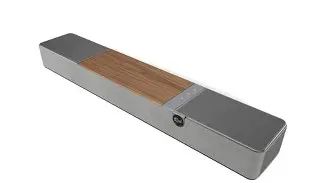
Additionally, buyers who need advanced room correction and customizable EQ will want to verify whether the soundbar’s controls meet those specific needs, or whether external equipment or apps are required to obtain the desired tuning.
Conclusion
Switching a TV’s audio to the Klipsch Flexus Core 100 typically results in a clear, practical improvement for everyday viewing and casual music listening. For people living in small-to-medium spaces who want better dialogue clarity, a more satisfying movie soundstage, and a compact, easy-to-install package, the Core 100 offers a compelling balance of performance and convenience. It is not a substitute for a multi-speaker home theater or a high-end stereo rig, but it does a solid job of bridging the gap between underpowered TV speakers and more elaborate audio systems.
Ultimately, the decision should be guided by room size, listening priorities, and whether the buyer anticipates expanding their setup later. For many, the Flexus Core 100 will be the upgrade that delivers the most noticeable real-world improvement for the least hassle.