Spec Battle: Kaleidescape Strato E vs Klipsch Flexus Core 300 — Is It Worth Upgrading?
When evaluating an upgrade to a home theater setup, buyers frequently face a choice between improving the source or improving the soundstage. Kaleidescape Strato E and Klipsch Flexus Core 300 represent two very different approaches to elevating the living-room cinema experience: the former focuses on source fidelity and curated movie delivery, while the latter targets immersive audio improvement in a compact, user-friendly package. This article compares both products in practical, owner-focused terms to help readers decide whether an upgrade is worth it and which direction makes the most sense for typical real-world use cases.
Overview: Purpose and Positioning
Kaleidescape Strato E — The Audiovisual Purist’s Source
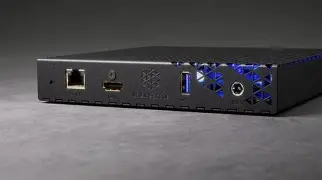
Kaleidescape has long positioned itself as a premium provider of high-quality movie content and playback hardware for enthusiasts who prioritize audiovisual fidelity. Strato E continues that tradition as a dedicated source/player that emphasizes high-bitrate 4K playback, tight integration with the Kaleidescape ecosystem, and a simplified, catalogued movie collection experience. For buyers who already have an excellent display and speaker system, Strato E is designed to extract the best possible performance from that investment by delivering clean, controlled video and multichannel audio streams.
Klipsch Flexus Core 300 — The Modern Soundbar Upgrade
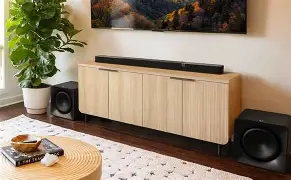
Klipsch’s Flexus line is aimed at the mainstream to enthusiast buyer who wants a compact, turnkey way to dramatically improve sound without ripping out a living room. The Flexus Core 300 is a feature-packed soundbar solution that focuses on clarity, dynamic impact, and user convenience. It usually includes processing for virtual height channels, easy HDMI eARC connectivity, wireless subwoofer support, and streaming features—making it a strong candidate for users who prioritize better sound with minimal installation complexity.
Detailed Analysis: What Each Product Brings to Real-World Viewing
Video and Source Quality
Strato E excels here: its role as a dedicated player means it is optimized for delivering high bitrate 4K files or downloads that preserve more original film information than typical streaming services. Buyers who care deeply about tone mapping, color fidelity, and consistent frame handling will appreciate a device whose firmware and user experience are oriented around those goals. Kaleidescape’s catalog management and the ability to purchase or store titles locally can reduce compression artifacts and internet-related variability.
Flexus Core 300 is not a video source. It relies on the TV or external sources for picture processing. For buyers whose main complaint is poor on-screen visuals, the soundbar won’t improve resolution or HDR handling. However, because it usually supports HDMI eARC and audio passthrough, it integrates cleanly with high-quality sources like Strato E, Blu‑ray players, or high-end streaming devices.
Audio Performance and Formats
Audio is where the two diverge in user impact. Strato E typically outputs multichannel, lossless-capable streams (including Atmos-capable tracks where available) to the connected AV receiver or sound system. That makes it ideal for users with discrete speaker arrays or high-end AVR setups who want the best possible source for Atmos and object-based mixes.
The Flexus Core 300 focuses on delivering a satisfying, immersive audio experience within a single integrated package. It usually features Klipsch-tuned drivers for dynamic midrange and punchy low end, with digital signal processing to simulate height and surround effects. While it can accept Atmos metadata and decode or render it in various ways, a dedicated multi-channel setup fed by a high-bitrate source will generally outclass a soundbar in absolute spatial fidelity. Still, for typical living rooms, a properly configured Flexus Core 300 can produce a dramatic and listener-pleasing upgrade over a TV’s built-in speakers.
Find top-rated TVs & Home Theater products at great prices.
Browse Now →Integration and Ecosystem
Kaleidescape is built around a specific ecosystem: store, server/player, and client apps. That ecosystem advantage shows in cataloguing, parental controls, and a consistent browsing experience. Buyers who want a pristine, museum-like movie library and the ability to keep titles locally should value Kaleidescape’s approach.
Klipsch Flexus Core 300 emphasizes compatibility and convenience. Expect support for popular streaming protocols, app-based firmware updates, and easy pairing with additional Klipsch modules such as wireless surrounds or subs. For someone who wants fewer moving parts and simple control via TV remote or voice assistant, the Flexus platform is built for that buyer.
Setup, Maintenance, and Day-to-Day Use
Strato E requires disciplined integration: a competent AVR or pre/pro, proper HDMI routing, and occasional updates or content management. The payoff is a streamlined, high-fidelity playback experience for movie nights and collections.
Flexus Core 300 trades complexity for immediacy. Users can usually set it up in under an hour, calibrate basic levels, and get much better sound out of the box. For households where simplicity matters—families, multi-use living rooms, or renters—the ease of setup is a major selling point.
Pros & Cons
Kaleidescape Strato E
- Pros: Exceptional source fidelity for 4K/HDR movies; tightly curated catalog and local storage options; outputs high-bitrate multichannel audio suitable for top-tier AVR and speaker systems; excellent metadata and library management for collectors.
- Cons: Premium price positioning; benefits are most apparent with an already capable display and speaker system; dependency on Kaleidescape ecosystem for content acquisition and management; more complex setup than a plug-and-play soundbar.
Klipsch Flexus Core 300
- Pros: Significant audio upgrade over TV speakers; compact and straightforward installation; support for modern connection standards (eARC, HDMI); expandable with wireless subwoofer and surrounds; tuned for impactful, room-friendly sound.
- Cons: Cannot replace the fidelity of a full multi-speaker Atmos rig in large dedicated rooms; virtualization is a compromise compared with discrete height channels; may require additional sub or surrounds for deep bass and full enveloping sound.
Quick Comparison
| Feature | Kaleidescape Strato E | Klipsch Flexus Core 300 |
|---|---|---|
| Product Type | Dedicated 4K movie player / server | Soundbar / home theater audio system |
| Primary Benefit | Highest-quality source playback and curated library management | Turnkey immersive sound upgrade for living rooms |
| Video Capabilities | High-bitrate 4K/HDR output for compatible displays | Relies on TV/source for picture |
| Audio Handling | Lossless multichannel output; ideal for AVR + speaker arrays | Integrated stereo + virtualization; optional external sub/surrounds |
| Ease of Setup | Moderate; requires AV components and routing | Easy; mostly plug-and-play |
| Best For | Collectors, cinephiles, dedicated home theaters | Apartment living rooms, casual to serious viewers wanting simplicity |
| Upgrade Impact | Large when paired with good display and speakers | Large vs TV speakers but limited compared to full surround |
Real-World Use Cases: Which Buyer Benefits Most?
Dedicated Home Theater with Existing AVR and Speakers
Someone who has invested in a multi-channel AVR, floor-standing speakers, and a high-end projector or TV will likely see more audible and visible benefit from upgrading the source with a Strato E. The higher bitrate files and consistent playback eliminate many of the streaming variables that can mask what a good system is capable of reproducing.
Living Room Where Simplicity Matters
For buyers who use their main TV for everything—sports, news, streaming, casual movie nights—and who don’t want the complexity of a separate receiver and multi-speaker setup, the Flexus Core 300 provides a big leap over built-in TV audio. It is the pragmatic choice for improving everyday viewing without a full overhaul.
Shop the latest TVs & Home Theater picks on Amazon.
Shop Amazon →Mixed-Use Households
Families who need both convenience and good sound may find the Flexus line’s expandability attractive: a Core 300 soundbar today, add a wireless subwoofer and rear modules later. Conversely, a homeowner who wants an heirloom-quality movie library and plans to upgrade speakers over time may prefer starting with a Strato E as the long-term foundation.
Buying Guide: Questions to Ask Before Upgrading
- What’s the current weakest link?—If the TV’s picture is underwhelming but the sound is already good, a source or display upgrade is the priority. If the picture is excellent but the sound is tinny, a soundbar like the Flexus Core 300 can deliver the most immediate satisfaction.
- How much of the home theater experience is content-dependent?—Kaleidescape’s strength is providing higher-fidelity content. If the buyer streams most content from standard services, the marginal benefit of a premium source diminishes unless they are willing to acquire high-bitrate files or subscribe to premium tiers.
- Is the room suitable for a full speaker setup?—Room size, furniture layout, and aesthetics influence whether a discrete multi-speaker system or a compact soundbar is a better fit. Small rooms often benefit more from a well-tuned soundbar; dedicated rooms favor separates.
- How important is ease of use?—Soundbars win on convenience. A Strato E’s benefits require someone comfortable with an AVR ecosystem or willing to maintain a local media library.
- Does the buyer plan to expand the system?—If expandability is a goal, look at the product roadmaps and accessory compatibility. Flexus products are typically modular; Kaleidescape’s ecosystem is focused on storage and client playback across a home network.
- Budget and perceived value:—Consider the total cost of ownership. The Strato E is a component in a larger, higher-cost chain (AVR, speakers, display). The Flexus Core 300 often delivers a more immediate price-to-impact improvement for average households.
Practical Advice for Installation and Calibration
For Strato E owners, routing clean HDMI paths, disabling unnecessary TV processing, and using a reliable AVR with up-to-date HDMI bandwidth handling are essential steps. Professional calibration of display tone mapping and speaker levels will maximize return on investment. For Flexus Core 300 buyers, take time to position the bar at ear level, use any room-correction features the product offers, and if adding a subwoofer, experiment with placement for coherent bass.
When an Upgrade Is Worth It
An upgrade is worth it when it solves the user’s main pain point. If the problem is inconsistent streaming quality and a desire for pristine video and audio from purchased content, Strato E offers clear benefits. If the problem is lackluster sound from the TV that leaves dialogue muddy and action sequences flat, a Flexus Core 300 will transform the experience quickly and with minimal fuss.
Conclusion
Strato E and Flexus Core 300 address different layers of the home theater stack. Kaleidescape Strato E is an investment in source fidelity and movie ownership, best justified in setups where the display and speaker systems can take full advantage of higher bitrate media. Klipsch Flexus Core 300 is a practical, high-impact audio improvement for living rooms where ease of setup and day-to-day convenience matter most. For many buyers the right answer is not one or the other but which upgrade aligns with their priorities: fidelity-first cinephiles will favor Strato E (and the downstream speaker investments it complements), while users seeking an immediate, measurable improvement to everyday audio will find the Flexus Core 300 a compelling and cost-effective option.