Which is Better Value? Adata Sd810 External Ssd vs Id Shield Compared
Introduction
When shoppers evaluate technology purchases, "value" means more than upfront price — it includes usefulness, longevity, security, and how well a product solves real problems. This article compares two very different offerings that often appear on a buyer's radar: the Adata SD810 external SSD, a portable storage device for moving and protecting files, and ID Shield, a subscription identity-protection service designed to detect and remediate identity theft. The goal is not to declare a universal winner but to explain which product delivers better value for different needs, budgets, and use cases.
How to judge value between a device and a service
Comparing hardware against subscription services requires a clear set of evaluation criteria. The following framework guides the analysis in this article:
- Primary benefit: What core problem does the product solve?
- Cost model: One-time purchase versus recurring fees, and predictable lifetime cost.
- Risk reduction: How well does it reduce a relevant risk (data loss for SSDs; identity theft for ID protection)?
- Usability and maintenance: Ease of setup, day-to-day use, and ongoing upkeep.
- Longevity and future-proofing: Expected usable lifespan and how often replacement or renewed subscription is required.
- Real-world fit: Which types of buyers or scenarios benefit most?
Product analysis: Adata SD810 External SSD
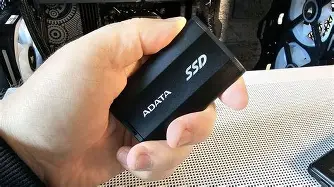
The Adata SD810 is positioned as a portable external solid-state drive. External SSDs of this class are typically targeted at users who need faster-than-hard-drive performance, compact form factors, and better shock resistance than spinning disks. The SD810 offers the familiar benefits of SSDs in an external enclosure: quick file transfers, low power draw, and the convenience of plug-and-play portability.
Real-world use cases
- Photographers and videographers who move large raw files or video clips between shoots and editing rigs.
- Traveling professionals who need an encrypted local copy of work files without reliance on public Wi‑Fi or cloud uploads.
- Home users seeking a fast local backup for important documents, media libraries, and system images.
- Students and creators who regularly transfer project files between school and home computers.
What buyers typically care about
Buyers evaluate external SSDs primarily on capacity options, interface (USB-C vs older USB), reported transfer speeds, physical size and durability, included software (backup utilities, encryption), warranty length, and price per gigabyte. Portability and a solid warranty are often decisive factors for those using the drive on the go.
Practical considerations
External SSDs are a tangible asset: once purchased they don't require monthly payments. They serve as both active portable storage and a component in a backup strategy. Key practical items to consider are encryption (hardware or software), physical protection (rubberized casing or rugged enclosure), and compatibility with target devices (e.g., computers without USB-C ports may need adapters).
Product analysis: ID Shield
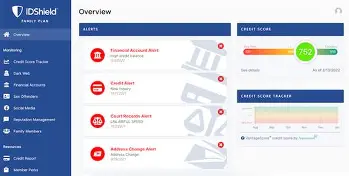
ID Shield is an identity protection service that markets continuous monitoring and restoration assistance. Services in this category typically offer credit monitoring, social security number monitoring, dark web scanning, alerts for suspicious activity, and a remediation service that helps users recover if identity theft occurs. Most providers also offer some level of fraud remediation and support from recovery specialists.
Real-world use cases
- Individuals who have experienced or are worried about past data breaches and want proactive monitoring.
- People with frequent online activity — shopping, banking, or social media — who want early alerts for compromised information.
- Families who want to protect spouses and children under a consolidated plan (many providers offer family add-ons).
- High-net-worth individuals or anyone with complex credit histories who want concierge-style remediation support.
What buyers typically care about
Potential customers focus on the breadth of monitoring (credit bureaus, public records, dark web), the speed and clarity of alerts, whether full credit freezes or remediation are handled, the availability of identity restoration specialists, insurance or reimbursement limits, and the cost of subscription plans — including family vs individual pricing.
Practical considerations
ID protection services are preventative and reactive in different ways than physical storage: they attempt to detect misuse of personal data early and provide human assistance if identity theft occurs. A subscription can feel valuable if it reduces anxiety and reduces time and financial losses in a worst-case event, but the benefit is probabilistic — it depends on whether and how often fraud attempts happen.
Discover deals on Laptops & Computers — updated daily.
See Deals →Pros & cons
Adata SD810 External SSD — Pros & Cons
- Pros:
- Fast local transfers compared with external hard drives, improving workflow for large files.
- Portable and power-efficient — convenient for travel and on-site work.
- One-time purchase: no ongoing subscription fees to maintain functionality.
- Useful as part of a simple 3-2-1 backup strategy (local copy + offsite/cloud copy).
- Cons:
- Physical device can be lost, damaged, or stolen if not encrypted or physically secured.
- Capacity and continued relevance decline over time as storage needs grow; eventual replacement required.
- Does not prevent online identity theft or financial fraud — addresses data availability, not identity risk.
- Performance and warranty vary by model; shoppers must check specs and terms rather than rely on brand alone.
ID Shield — Pros & Cons
- Pros:
- Continuous monitoring can provide early alerts for suspicious use of personal data.
- Access to remediation specialists reduces the administrative burden if identity theft occurs.
- Subscription model often includes family plan options and additional identity-related monitoring tools.
- Psychological value: peace of mind for those who feel vulnerable after breaches.
- Cons:
- Recurring cost that adds up over years — value depends on the probability of an incident and the financial/labor cost of recovery without a plan.
- Monitoring cannot stop every form of identity theft, and false positives/alerts can cause anxiety.
- Some services only cover certain types of accounts or offer limited insurance — buyers must read terms closely.
- Overlap with free or bank-provided services; buyers should check existing protections before subscribing.
Side-by-side comparison
The following table isolates the major differences and value drivers so readers can quickly scan how these two products compare on key dimensions.
| Category | Adata SD810 External SSD | ID Shield (Identity Protection Service) |
|---|---|---|
| Primary purpose | Local, portable data storage and backup | Monitoring, alerting, and remediation for identity theft |
| Cost model | One-time purchase (device cost varies by capacity) | Recurring subscription (monthly/annual) |
| Immediate tangible benefit | Faster transfers, offline backups, portability | Alerts and expert assistance; no tangible physical product |
| Risk reduced | Data loss and slow file transfers | Identity theft and fraud recovery costs/time |
| Ideal buyer | Content creators, travelers, anyone needing fast portable storage | People with high online exposure, prior breaches, or complex financial profiles |
| Maintenance | Minimal — firmware updates, occasional checks, backups | Ongoing — monitoring alerts, plan renewals, possible administrative actions when alerts occur |
| Longevity | Multi-year hardware life; performance degrades with heavy writes over time | Valuable only while subscribed; long-term value depends on uninterrupted subscription |
| Security considerations | Encryption recommended; physical security important | Relies on timely alerts and effectiveness of remediation team |
Buying guide: Which one should be purchased and why?
Choosing between an external SSD and an identity protection subscription is less about which is universally "better" and more about aligning purchase to specific needs. Below are practical decision points to guide buyers.
1. Clarify the most pressing risk
If the immediate and frequent problem is losing or moving large files — for example, a photographer who needs daily on-site backups — an external SSD is high-value because it directly solves that problem. If the main worry is unauthorized use of personal information or the complexity of recovering from identity theft, a subscription service like ID Shield addresses that risk.
2. Budget horizon: one-time vs recurring
Buyers with limited monthly budgets may prefer a one-time purchase that provides multi-year utility. Conversely, those who can absorb a small recurring fee and value ongoing monitoring may find a subscription worthwhile. Calculate three- to five-year costs: a $100 SSD remains $100; a $10/month ID protection plan becomes $360 over three years.
3. Consider combined strategies
For many households, combining both is the most resilient approach. The SSD protects data availability and speeds up workflows; identity protection acts as insurance against personal data misuse. If budget allows, prioritize the product that resolves your most immediate pain point first, then add the other when feasible.
4. Evaluate alternative or overlapping protections
Before buying ID Shield, check existing protections: many banks and credit card companies offer fraud monitoring and zero-liability policies. Credit bureau monitoring may be available for free or at reduced rates. For SSDs, cloud backups can provide redundancy; pairing a local SSD with cloud sync reduces single-point failures.
5. Specific feature checklist
- For the SSD: confirm interface (USB-C recommended), capacity needed, hardware encryption availability, warranty length, and whether the enclosure is rugged if used outdoors.
- For ID Shield: confirm which credit bureaus and identity elements are monitored, the scope of dark web monitoring, remediation services and their responsiveness, insurance or reimbursement limits, and family coverage options.
- Read terms and policy documents: warranty terms for hardware and terms of service for identity plans often contain important limitations.
Value scenarios and recommendations
Below are sample profiles and the recommended product alignment based on typical buyer priorities.
Looking for the best Laptops & Computers deals on Amazon?
Browse Now →Content creator on the move
Needs: fast transfers, local backups, durability. Recommendation: prioritize the Adata SD810 (or similar portable SSD) because it directly reduces downtime and lost work. Consider adding an identity plan if handling client PII or financial transactions.
Frequent online shopper and social media user
Needs: protection from fraud, rapid response to data breaches. Recommendation: ID Shield (or comparable monitoring) provides ongoing protection. Maintain regular local backups but the subscription likely offers higher marginal value for this persona.
Small business owner
Needs: secure client data storage, business continuity, and protection from fraudulent transactions. Recommendation: invest in both where budget allows. The SSD supports backups and quick file recovery; identity protection helps with business owner and employee identity risk and may simplify remediation after breaches.
Savvy budget shopper
Needs: maximum utility per dollar. Recommendation: prioritize the one-off purchase that solves the most immediate workflow problem. If data portability matters more than identity concerns, buy the SSD and use free monitoring tools for identity; otherwise buy subscription protection and use low-cost cloud backups.
Conclusion
Comparing an Adata SD810 external SSD to ID Shield is an exercise in matching product function to real-life needs. The SSD delivers tangible, immediate value for anyone who needs fast, portable storage and a reliable local backup — it is a one-time investment with clear, measurable benefits. ID Shield delivers a different type of value: ongoing monitoring and remediation that reduce the time, stress, and potential financial impact of identity theft, but it requires a recurring payment and its value accrues only if suspicious activity occurs or if early detection prevents large losses.
Which is better value depends on what the buyer values most right now. For those who routinely handle large files or need offline backups, the external SSD is usually the smarter first buy. For anyone who spends a lot of time online, has had past compromises, or is particularly worried about the consequences of identity theft, an identity-protection subscription can be a worthwhile recurring investment. Many households and professionals will find that the strongest overall protection comes from a combination of both — secure, redundant backups for files plus monitoring and remediation for personal data — applied according to budget and risk profile.